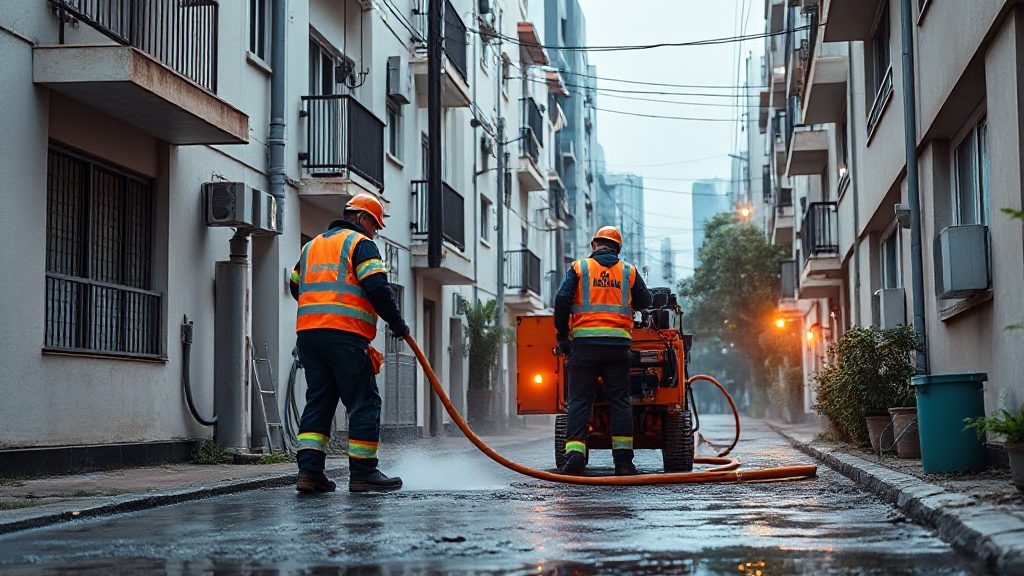
When It Hits Several Units: Organizing the Neighbors
When three apartments back up at once, the problem is no longer private. In Vila Andrade, a neighborhood of dense vertical living and older horizontal streets, a single blockage in a shared stack can send dirty water into kitchens on different floors within the same afternoon. The first instinct is to call a plumber for your own unit, but the faster and cheaper answer is to treat it as a building-wide event. If you are searching for a desentupidora em Vila Andrade São Paulo SP, you are likely already past the point of a private fix and into coordination mode.
Recognizing the Moment a Private Problem Becomes Collective
Not every slow drain is a building emergency. The signal to escalate is repetition: the same stack, the same side of the corridor, or the same floor pattern showing up in more than one unit. When a neighbor knocks to say their sink gurgles too, you have a shared line, not a personal clog.
Signs that point to a shared stack rather than a single fixture
- Backflow in two or more units that share a vertical or horizontal drain line.
- Gurgling sounds in a sink when a neighbor flushes or showers.
- Water rising in a floor drain after laundry or dishwasher cycles upstairs.
- A persistent smell in common corridors, garages, or utility shafts.
Documenting these signs matters. A photo of the backup with a timestamp, plus notes on which units are affected, gives the responding team a map before they arrive. Shared evidence shortens diagnosis time and prevents the classic mistake of treating each unit as an isolated call.
What not to do while the line is still blocked
Do not pour chemical drain openers into multiple units at once. Caustic products can damage older PVC joints and create a hazard for the technicians who open the cleanout later. Avoid flushing water to “test” the line repeatedly, because each attempt adds volume to a system that has nowhere to send it. If there is any risk of sewage entering living spaces, keep children and pets away and ventilate.
Assigning Roles Before the Team Arrives
A building-wide blockage moves faster when three or four neighbors take clear roles instead of everyone calling the same number. This is not bureaucracy; it is how you avoid contradictory information reaching the dispatcher and how you keep access routes clear.
A simple role split that works in most condominiums
- Point person: one resident who calls the desentupidora Vila Andrade and stays on the line until an arrival window is confirmed.
- Access coordinator: someone who can open the garage, the utility room, and any locked cleanout areas, working with the doorman or building manager.
- Floor liaison: a resident on each affected floor who warns neighbors, moves cars if needed, and keeps a list of which units are backing up.
- Documenter: the person who photographs the affected areas and notes the time each symptom started.
In buildings without a resident syndic on site, the doorman often becomes the de facto access coordinator. Give that person the point person’s phone number so the responding crew is not stuck at the gate. Access is the most common delay in emergency hydraulic calls, more than equipment or traffic.
What information the dispatcher actually needs
When the point person calls, the useful details are: the full address, the number of affected units, whether the backup is clean water or sewage, whether there is a cleanout or inspection box visible, and whether anyone has already tried chemicals or a manual snake. A short, factual description beats a long story. If the building has a known history of root intrusion or a grease-heavy restaurant on the ground floor, mention it.
Communicating Without Turning the Group Chat into Chaos
Most Vila Andrade buildings already have a WhatsApp group. The problem is that during a backup, the group becomes a stream of duplicate photos and conflicting advice. A neighbor willing to organize can set a simple protocol: one thread for confirmed symptoms, one for logistics, and no forwarded remedies.
Messages that help versus messages that delay
Helpful: “Unit 42, sewage backup in the kitchen since 14:10, photo attached.” Unhelpful: “I think it’s the whole building, my cousin had this and it was roots.” Keep speculation out of the thread until the technician confirms the cause. If a neighbor has already called a different company, say so immediately so the point person can cancel or coordinate, avoiding two crews arriving for one job.
It also helps to post a single update after the crew arrives and another after they finish. Silence in the group chat breeds duplicate calls, and duplicate calls are the fastest way to lose your place in an emergency queue.
Keeping the syndic and the administration informed
If the building is professionally managed, the point person should send one concise message to the administrator with the address, the affected units, and the company contacted. This creates a record for insurance and maintenance planning. For recurring blockages, the administrator may authorize a preventive hydrojetting of the shared stack, which is cheaper than repeated emergency calls. Residents who want to understand what that service involves can ask the responding team directly or review the scope offered by a desentupidora Vila Andrade São Paulo SP before the next incident.
Closing the Loop and Preventing the Next Backup
Once the line is clear, the collective work is not finished. The neighbor who organized the response should collect the service report and share a short summary with the group: what caused the blockage, which section of pipe was affected, and what maintenance is recommended. This turns a stressful afternoon into institutional memory for the building.
Prevention in shared lines is mostly about what goes down the drains and what grows into them. Grease, wipes, and hair accumulate at the same low points year after year. Roots find the same joints. A building that schedules an annual inspection of its main stack, and that keeps a cleanout accessible, spends far less than one that waits for three apartments to flood at once.
The neighborly habit that matters most is early communication. A single message when the first drain gurgles, before the backup reaches the second unit, gives everyone time to act together. That is how a private inconvenience stays private, and how a building-wide emergency becomes a managed event rather than a crisis.